
Frankenstrategies!
If you read enough independent school strategic plans, you start to notice a pattern. The document runs thirty pages. It has five pillars, seven strategic priorities, twenty-three initiatives, and eighty-six action items. Every constituency is visible somewhere; every trustee's signature concern earns a bullet point. And the whole thing, read straight through, tells you almost nothing about what the school is actually going to do differently next year.
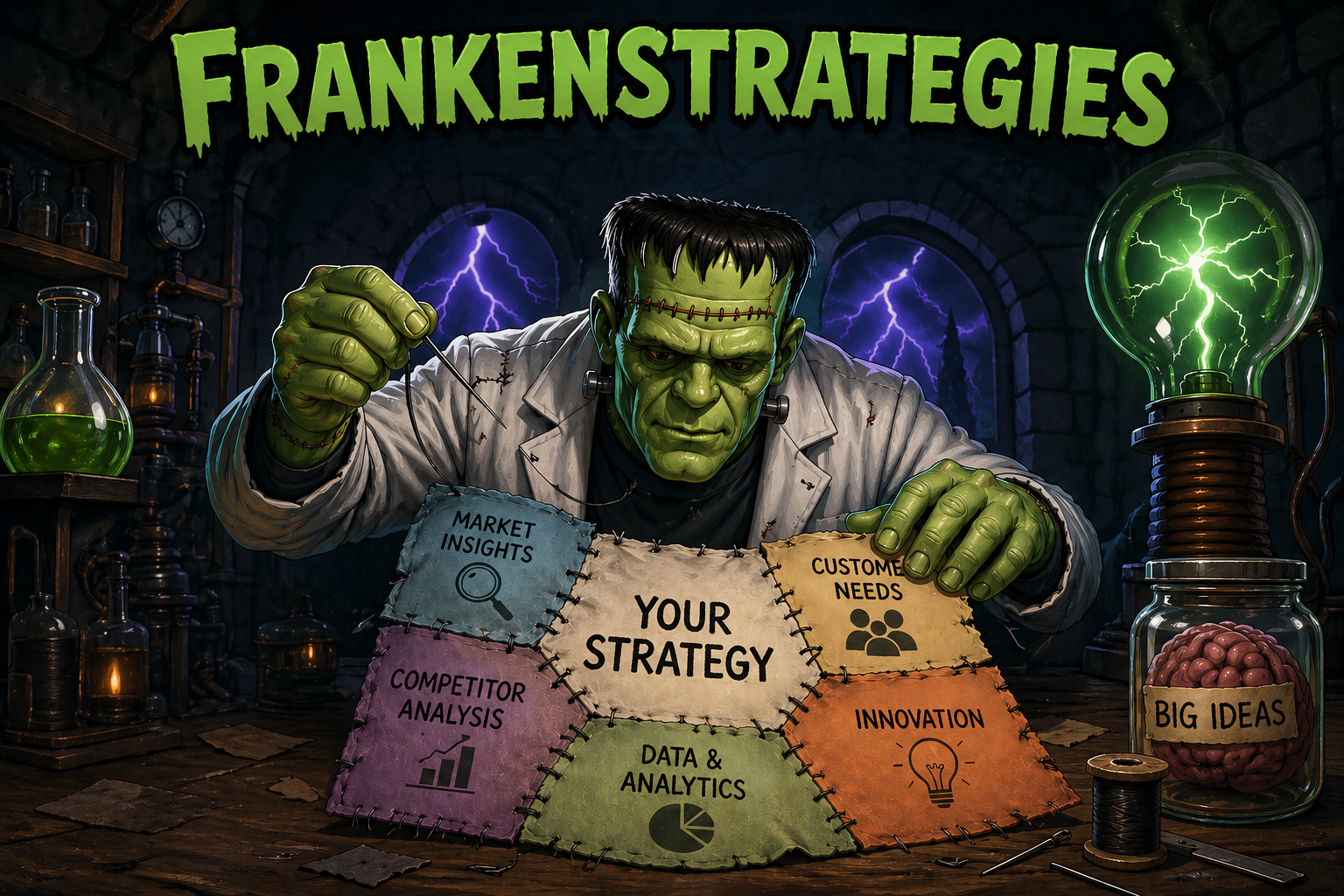
Svyatoslav Biryulin, a former CEO who writes about strategy, has a name for this. He calls them Frankenstrategies — plans stitched together from mismatched parts, in which the stated goals call for civilizational transformation while the actual project list amounts to "painting the fence green." Biryulin is writing about for-profit companies, where Frankenstrategies are mostly a cognitive failure: leaders who could not connect goals to the work. In independent schools, they are something different. They are a political achievement. The board has fifteen to twenty-five trustees with strong views, several committees generating content in parallel, faculty and parents and alumni and prospective families all reading the eventual document for evidence that they have been heard. The path of least resistance is to give everyone a clause. Once you give everyone a clause, you have built a Frankenstrategy.
The cost shows up three years in. The head can report that nearly every action item is on track, and yet enrollment is softer, faculty morale is no better, and the board is asking whether the plan "worked." The plan was not a theory of how the school would compete and flourish in its market. It was a list of things that were going to happen anyway, packaged as pillars to look like strategy. The real strategic questions — which families are we for, what do we offer them that they cannot get elsewhere, what will we stop doing to free the resources to do everything else well — were never answered, because answering them would have required the coalition to fracture.
The full piece argues that the antidote is not more rigor applied to the same process but a different kind of conversation at the start, and offers a simple diagnostic for telling whether your plan is a strategy or a coalition treaty. [Read the full essay here.]